
 AI Tools
 Health
 Math
Math Everyday Life
 Finance
 Physics
 Chemistry
 Statistics
 Construction
 Pets
Pets Time & Date
 Conversion Calculator
 Sign In
Follow Us On:
Follow Us On:
Select the parameters and enter their values. The calculator will instantly determine voltage, current, and other transformer-related terms.
Related
The transformer calculator finds the primary and secondary full load currents (Amps) and voltages of single and 3-phase transformers. It can function to make calculations for both ideal and real transformers and identify their types based on the turns ratio. Moreover, the tool also helps you estimate EMF & different transmission losses including:
A transformer operates to deliver current from one AC circuit to one or more AC circuits. This component works according to Faraday’s Law of Electromagnetic Induction to either step up or down the voltage.
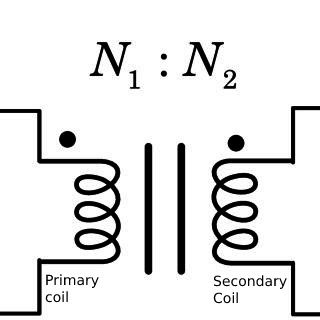
Transformer calculator considers the following equations that help you analyze a mathematical model of the transformer.
Where:
Full - Load Current (Amps) = kVA x 1000 / V
Full - Load Current (Amps) = kVA x 1000 / (1.732 × V)
Consider a single phase transformer of size about 56kVA. Its primary voltage is 350 volts and secondary voltage is almost 120 volts. Considering the transformer to be the ideal one, calculate the turns ratio and full load current range.
As the transformer is supposed to be ideal one: Turns Ratio = N1 / N2 = V1 / V2 = (350 / 76) = 4.60. Determining the full load currents:
Primary:
Primary Full - Load Current (Amps) = kVA x 1000/V
Primary Full - Load Current (Amps) = 56 x 1000/350
Primary Full - Load Current (Amps) = 56 x 2.857
Primary Full - Load Current (Amps) = 159.992
Secondary:
Secondary Full - Load Current (Amps) = kVA x 1000/V
Secondary Full - Load Current (Amps) = 56 x 1000/120
Secondary Full - Load Current (Amps) = 56 x 8.333
Secondary Full - Load Current (Amps) = 466.648
Related: Do not forget to calculate Voltage Drops and Amperage across different circuits while analyzing the functionality of a transformer.
To size a transformer effectively, you can use the given equation. All you need to simply multiply the amperes with the secondary output voltage.
Important:
We do not recommend loading a transformer above 80% of its KVA rating. To find the minimum KVA rating needed, divide the calculated KVA by a factor of 0.8. All values should be reviewed and confirmed by an electrician or electrical engineer.
In a transformer, a rectifier behaves as a device that converts the AC into a high DC. This direct amperage is further used for different chemical processes, including
Power factor is the basic difference between kW and kVA. Where the kW is the power of the real transformer, the kVA is considered the power factor of the apparent transformer.
A 150 Kva transformer can handle primary voltage up to 480 V and secondary voltage up to 120/280V. The equivalent current rating for the voltage os about 400 Amps - CU.
| KVA | 120V | 208V | 240V | 277V | 480V | 600V |
| .25 | 1.2 | 1. | 0.9 | 0.5 | 0.4 | |
| .50 | 4.2 | 2.4 | 2.1 | 1.8 | 1.0 | 0.8 |
| .75 | 6.3 | 3.6 | 3.1 | 2.7 | 1.6 | 1.3 |
| 1 | 8.3 | 4.8 | 4.2 | 3.6 | 2.1 | 1.7 |
| 1.5 | 12.5 | 7.2 | 6.2 | 5.4 | 3.1 | 2.5 |
| 2 | 16.7 | 9.6 | 8.3 | 7.2 | 4.2 | 3.3 |
| 3 | 25 | 14.4 | 12.5 | 10.8 | 6.2 | 5 |
| 5 | 41 | 24 | 20.8 | 18 | 10.4 | 8.3 |
| 7.5 | 62 | 36 | 31 | 27 | 15.6 | 12.5 |
| 10 | 83 | 48 | 41 | 36 | 20.8 | 16.7 |
| 15 | 125 | 72 | 62 | 54 | 31 | 25 |
| 25 | 206 | 120 | 104 | 90 | 52 | 41 |
| 37.5 | 312 | 180 | 156 | 135 | 76 | 62 |
| 50 | 416 | 240 | 208 | 180 | 104 | 83 |
| 75 | 625 | 340 | 312 | 270 | 156 | 125 |
| 100 | 833 | 480 | 416 | 361 | 208 | 166 |
| 167 | 1391 | 803 | 695 | 603 | 347 | 278 |
| KVA | 208V | 240V | 480V | 600V |
| 3 | 8.3 | 7.2 | 3.6 | 2.9 |
| 6 | 16.6 | 14.4 | 7.2 | 5.8 |
| 9 | 25 | 21.6 | 10.8 | 8.6 |
| 15 | 41.7 | 36.1 | 18.0 | 14.4 |
| 30 | 83.4 | 72.3 | 36.1 | 28.9 |
| 45 | 124 | 108 | 54.2 | 43.4 |
| 75 | 208 | 180 | 90 | 72 |
| 112.5 | 312 | 270 | 135 | 108 |
| 150 | 416 | 360 | 180 | 144 |
| 225 | 624 | 541 | 270 | 216 |
| 300 | 832 | 721 | 360 | 288 |
| 500 | 1387 | 1202 | 601 | 481 |
| 750 | 2084 | 1806 | 903 | 723 |
| 1000 | 2779 | 2408 | 1204 | 963 |
| KVA | Insulation | |||
| 1 Phase | 3 Phase | NEMA Class | Temperature Class | Temperature Rise |
| 0.25-25 | 3-15 | F | 180° C | 115° C |
| 15-167 | 15-1000 | H | 220° C | 150° C |
Related
Add this calculator to your site.
×Just copy a given code & paste it right now into your website HTML (source) for suitable page.
Preview:



Easter into Action, Save With Satisfaction
UPTO
50 %
OFF
Give Us Your Feedback
Share Result
Transformer Calculator

Links
Home Conversion Calculator About Calculator Online Blog Hire Us Knowledge Base Sitemap Sitemap TwoEmail us at
Contact Us© Copyrights 2026 by Calculator-Online.net
How was your experience today?
Not now
Awesome! Would you mind sharing that on Trustpilot?
Your review helps others find a tool that actually works.
Write a Review on TrustpilotNot now
Sorry to hear that
Tell us what went wrong — we read every message.
Not now
Thanks for your feedback!
We'll use it to make things better.
